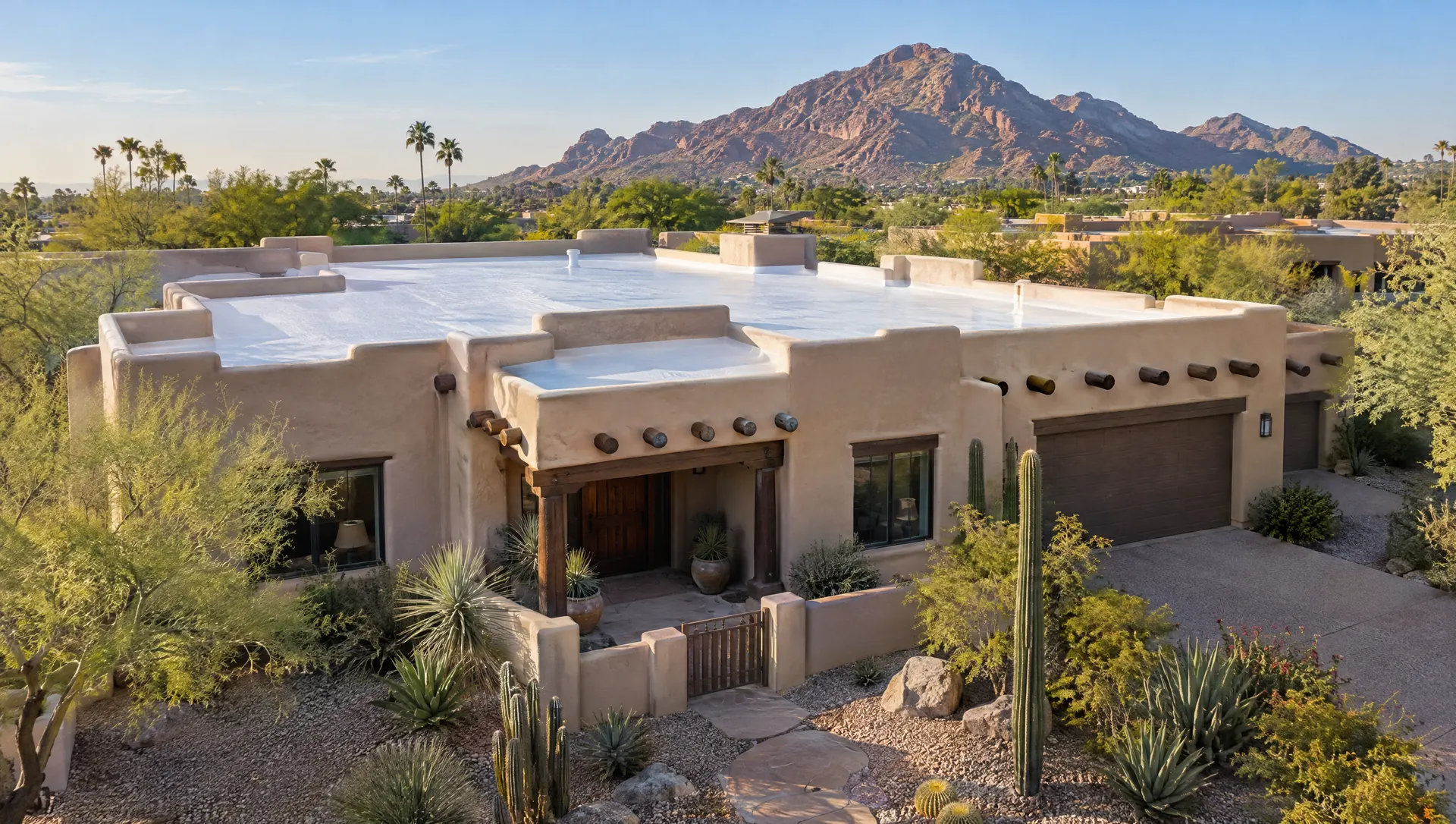
Scottsdale Residential Foam Roofing
Residential Foam Roofing in Scottsdale, AZ
Seamless spray foam roofs for flat and low-slope homes, built up to drain and sealed with a coating made for Arizona sun.
Scottsdale Residential Foam Roofing
Seamless spray foam roofs for flat and low-slope homes, built up to drain and sealed with a coating made for Arizona sun.
Residential foam roofing in Scottsdale makes the most sense on the roofs most Valley homes actually have: flat or nearly flat decks hidden behind parapet walls. Spray foam roofing installation starts with spray polyurethane foam that goes on as a liquid, expands within seconds and cures into one continuous layer with no seams for water to find.
That layer does two jobs. It's the waterproof surface, and it adds insulation across the whole deck. A reflective elastomeric coating goes over the top to protect the foam from UV and bounce back a good share of the summer sun.
Every project starts on the roof, not on the phone. We check what's up there now, whether it's dry, and where water sits after a storm. Then you get a written plan for your roof, not a one-size quote.
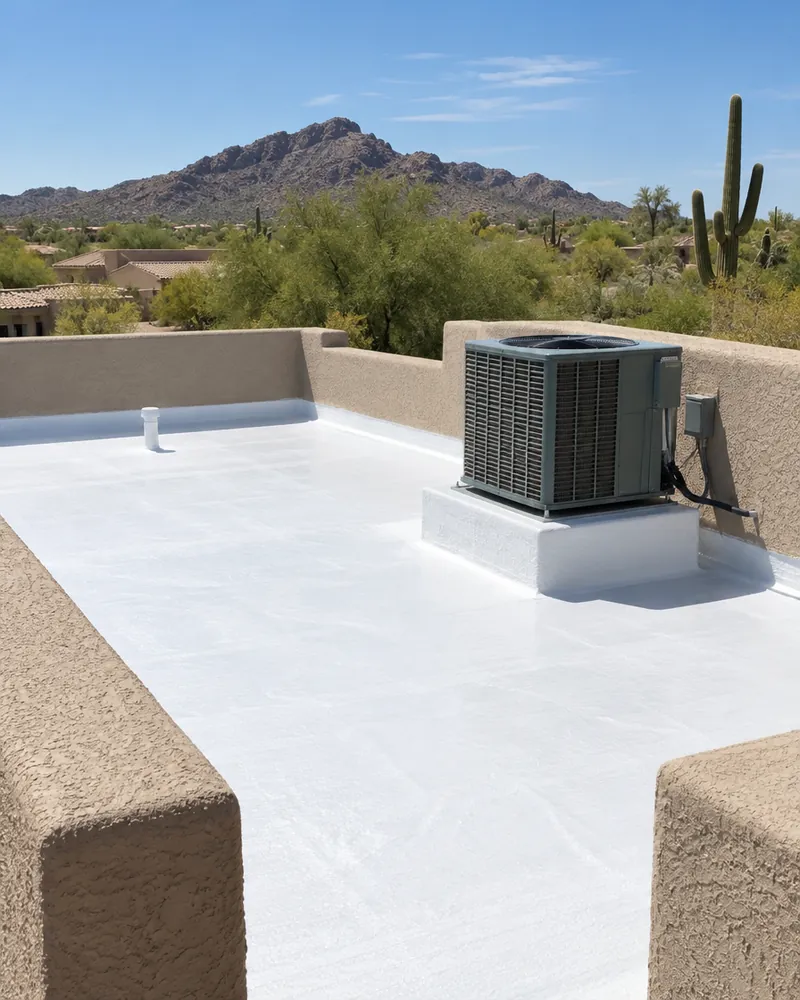
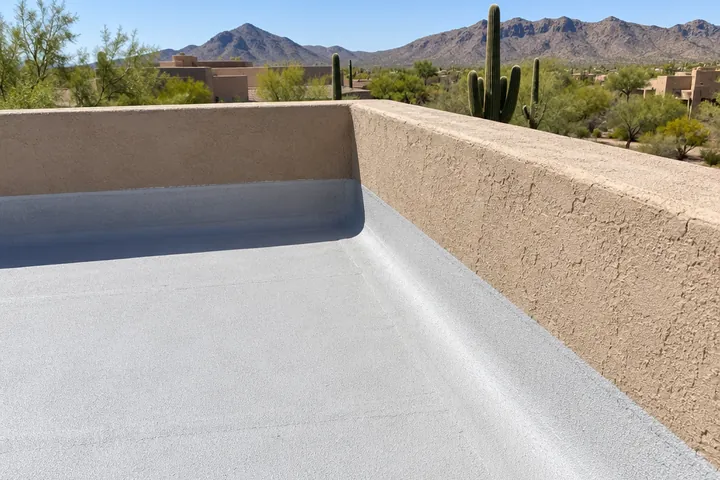
Pueblo, Santa Fe and territorial homes hide their roofs behind stucco walls. Foam runs up the inside of the parapet so the roof and wall form one sealed surface.
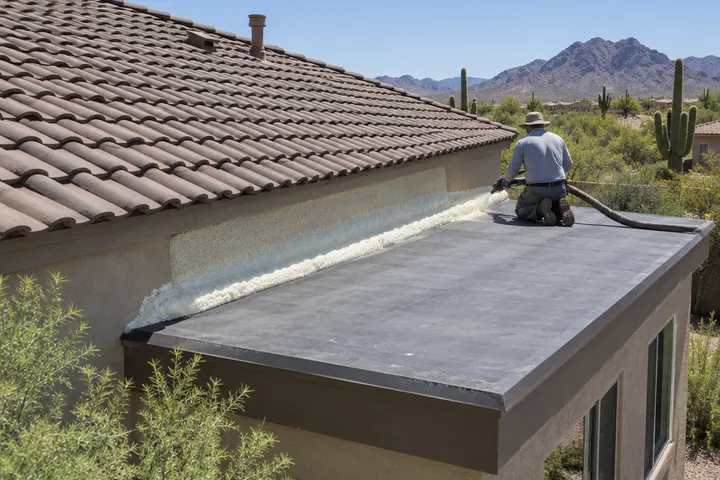
Family rooms, patio enclosures and second-story additions often have a lower pitch than the main roof. Foam ties the new section into the old without a seam at the joint.
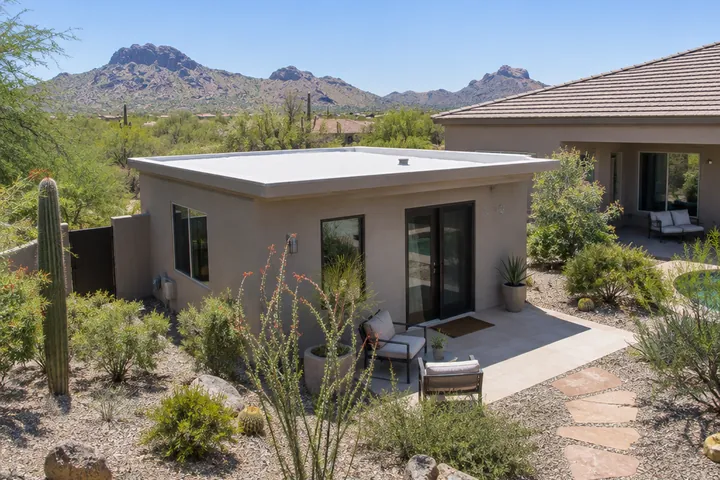
Detached garages and guest houses usually have small flat roofs that get little attention until they leak. They're a quick job to foam while the crew is already on site.
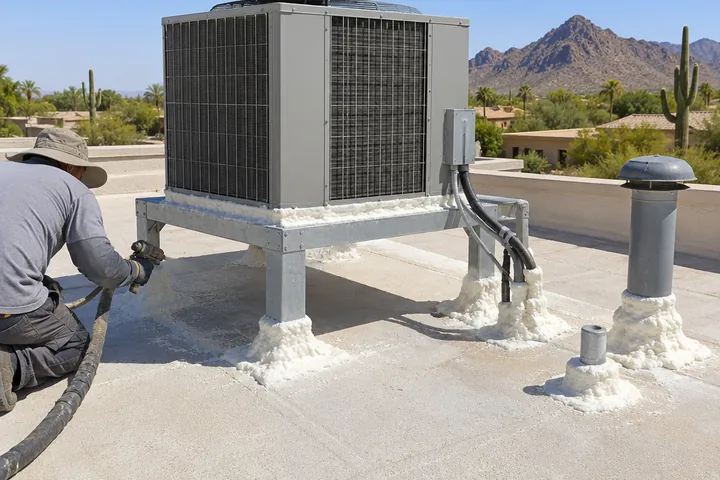
AC units, evaporative coolers, skylights and solar mounts all poke holes in a roof. Foam is sprayed around each one, which removes the flashing seams where many flat-roof leaks start.
| Roof type | Seams | Insulation added | Upkeep |
|---|---|---|---|
| Spray foam with coating | None, one continuous layer | Yes, across the whole deck | Inspect yearly, recoat when the coating wears |
| Built-up (tar and gravel) | Layered felts, flashed at edges | Little | Patching blisters and flashing |
| Modified bitumen (rolled) | Lapped seams every roll | Little | Seam and flashing repairs |
| Single-ply (TPO) | Welded seams | Only if board insulation is added | Seam checks, especially near equipment |
Foam isn't the only good flat roof, but it's the one that suits a parapet roof with lots of penetrations. There are no seams to fail and no flashing strips to peel away from the walls.
Bare foam breaks down in sunlight. The coating is what stands between the foam and the sun, so its thickness and condition matter more than anything else on the roof.
Monsoon season runs June 15 to September 30, with storms peaking mid-July to mid-August. A roof that ponds or has open seams shows it during those weeks.
Low spots hold water for days after a storm. Foam can be built thicker in those spots to push water toward the scuppers and drains.
A flat roof sits directly over your living space. A continuous layer of foam slows the heat moving down from the deck in summer.
The price of a residential foam roof comes from the square footage, the condition of the roof underneath and how thick the foam needs to be. A dry, sound roof can often be foamed over. A wet or layered roof needs a tear-off first, which adds labor and disposal.
Coating choice matters too. Acrylic and silicone coatings cost differently and recoat differently. So do parapets, crickets around equipment and drainage fixes. You get a written estimate that lists each part, after we've been on the roof.
Tell us about the roof and what you're seeing. We'll set up a time to inspect it and talk through options.
Free estimate, no obligation
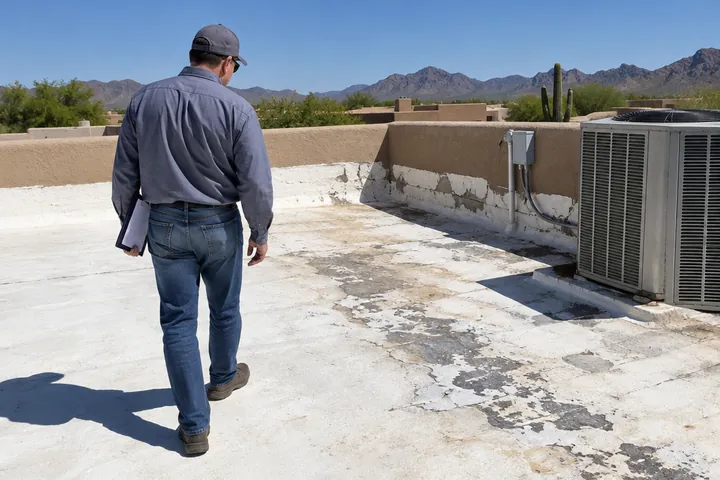
We walk the roof, check moisture in the existing layers and note every drain, scupper and penetration.
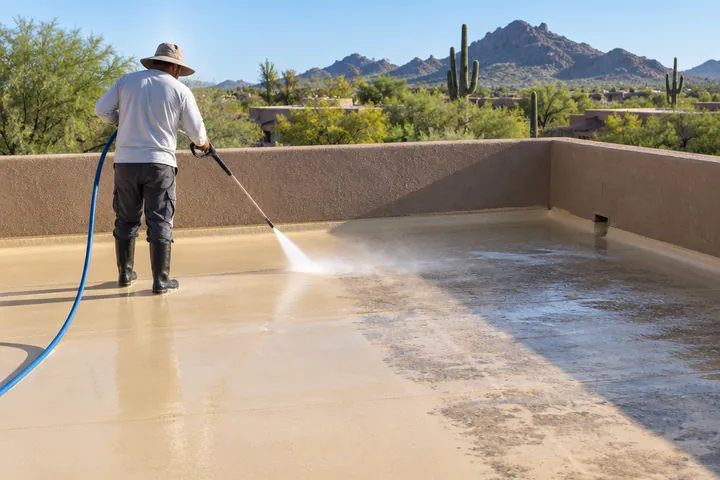
Loose material, gravel and wet layers come off. The surface is cleaned, and edges and equipment are masked.
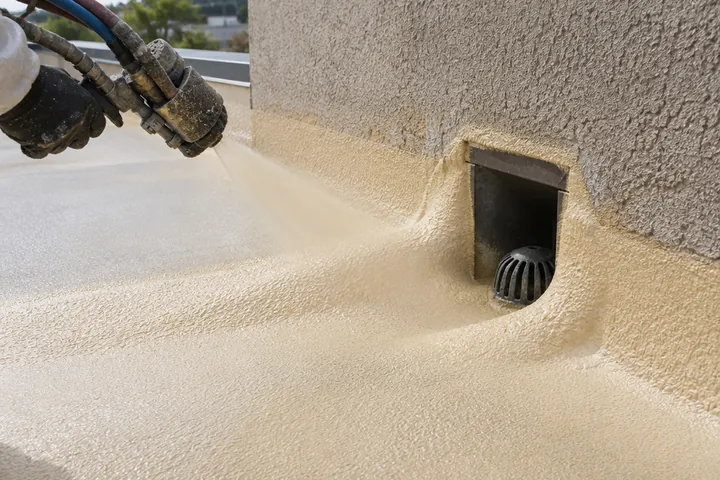
Foam is sprayed in passes to the planned thickness, built up at low spots so water runs to the drains.
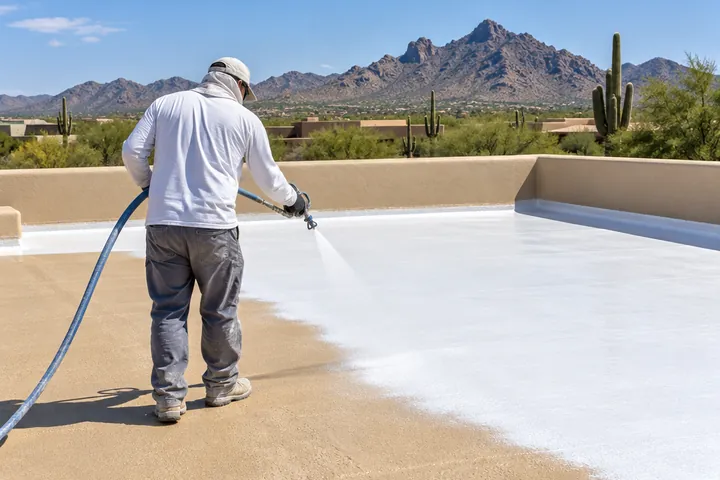
The reflective coating goes on in the specified thickness, and we walk the finished roof with you.
Most single-family flat roofs are sprayed and coated in a few days once the old surface is ready. Weather and tear-off can add time, so you get a schedule with your estimate.
Often, if the existing roof is dry and firmly attached. We test for moisture first. Wet sections have to come out, because foam sprayed over trapped water causes problems later.
On most Scottsdale homes the roof sits behind the parapet and can't be seen from the street. Coatings also come in tan and other colors when it matters.
Yes. If your community reviews exterior changes, we can provide the coating color and product details for the architectural review.