Spray Polyurethane Foam Roofing: How It Works in Scottsdale
Spray polyurethane foam roofing, often called SPF, is a roof made by spraying liquid foam onto the roof deck, where it expands and cures into one solid, seamless layer. A protective elastomeric coating goes on top. In Scottsdale it's one of the most common systems on the flat roofs behind parapet walls.
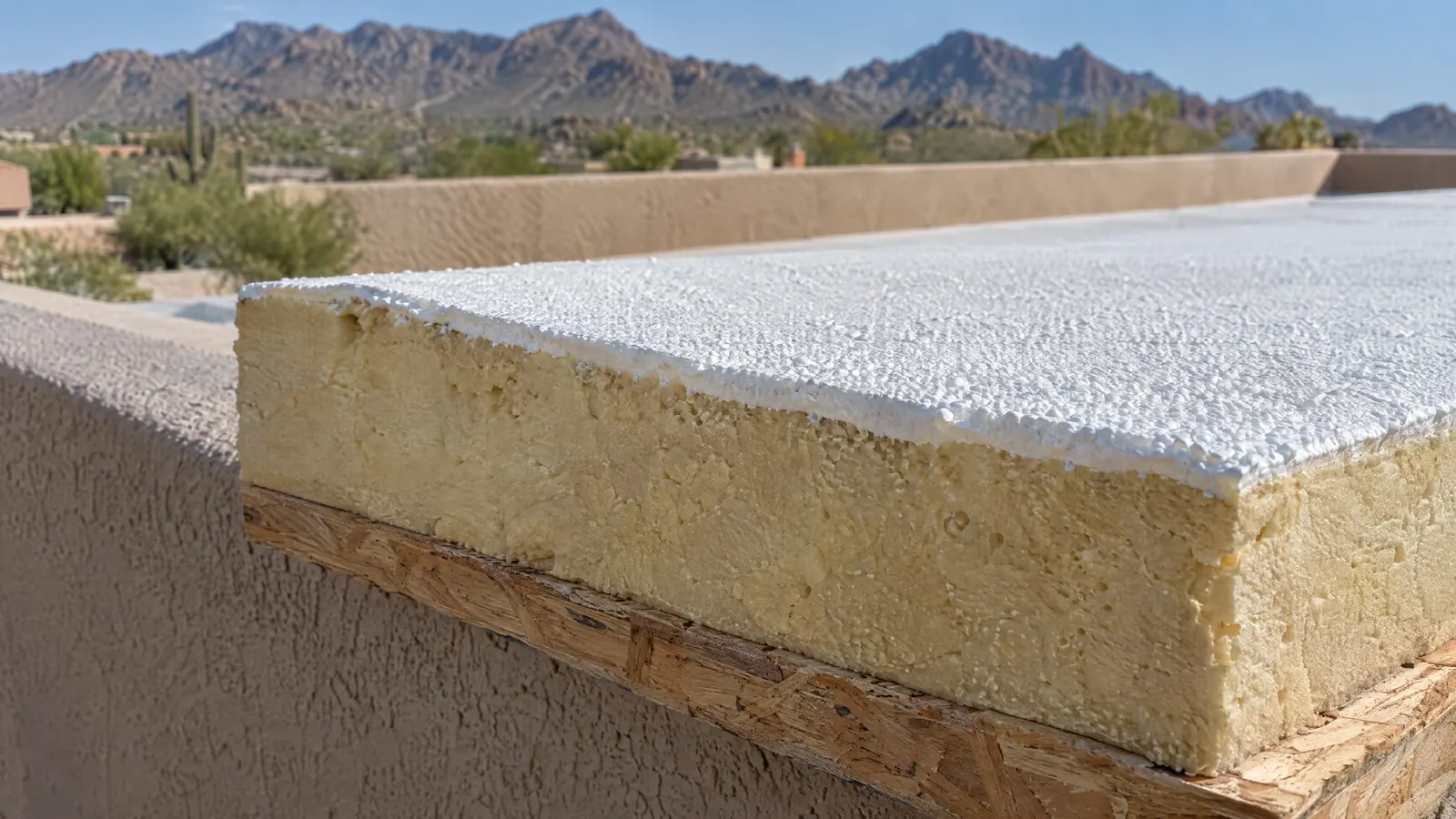
What Spray Polyurethane Foam Roofing Is
The foam starts as two liquid components that are mixed at the spray gun. Within seconds of hitting the roof, the mix expands and hardens into a rigid foam. Because it's sprayed rather than rolled out in sheets, there are no seams or laps for water to work into.
You'll also see it called sprayed polyurethane foam or polyurethane spray foam roofing. They're the same system. The foam is the waterproof, insulating layer, and the coating protects the foam from sun and weather.
How a Spray Foam Roof Is Installed
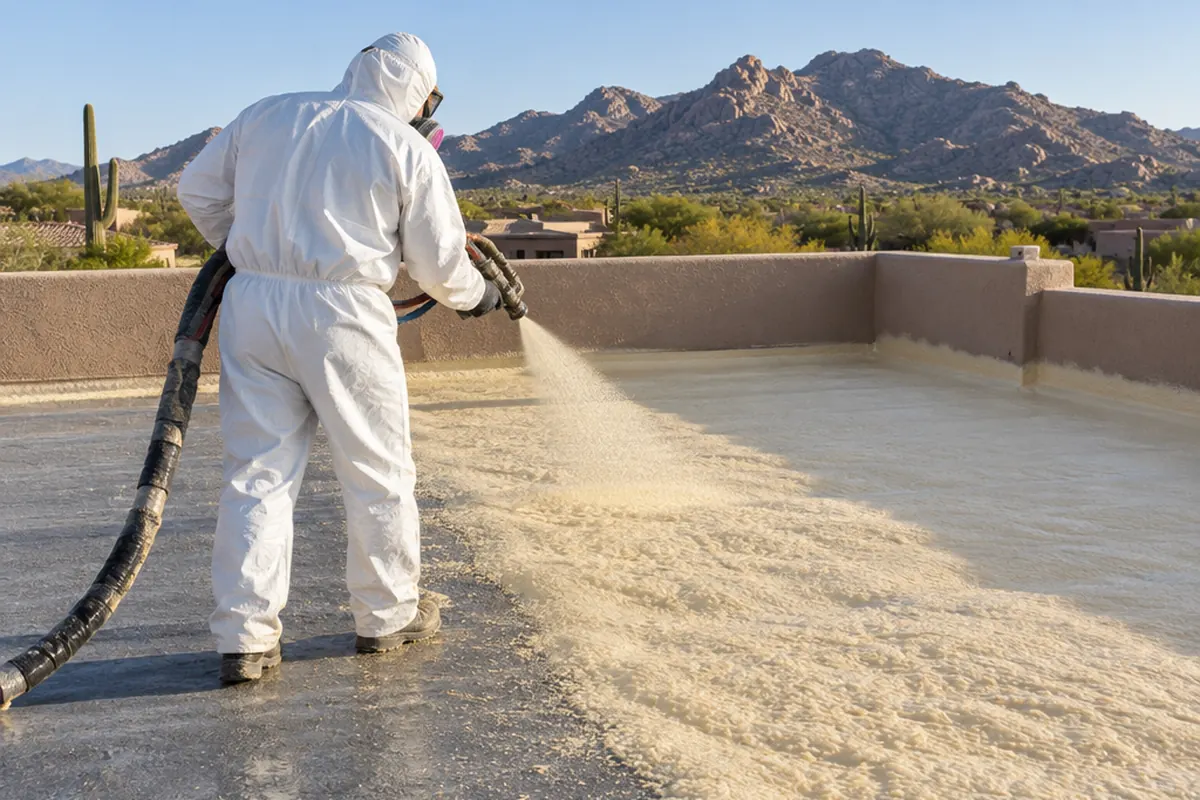
- Inspection. The existing roof is checked for moisture, drainage and damaged decking. Wet layers have to come out first.
- Surface prep. Gravel, loose material and debris come off, and the surface is cleaned so the foam bonds.
- Spraying the foam. Foam goes on in passes to the planned thickness, built up at low spots so water runs to the drains and scuppers.
- Coating. An acrylic or silicone elastomeric coating is applied over the foam, with granules on walkways where needed.
On many roofs the foam can go over the existing surface, as long as it's dry and well attached. See residential foam roofing and commercial foam roofing for how projects run on homes and buildings.
Why Scottsdale Flat Roofs Use Spray Foam
- Parapet roofs. Foam runs up the inside of the parapet, so the roof and wall form one sealed surface.
- Rooftop equipment. AC stands, pipes and skylights get foam sprayed around them, removing the flashing seams where many flat roofs leak.
- Drainage. Foam can be built thicker in low spots to move water off the roof.
- Heat. The foam adds insulation across the deck, and a light-colored coating reflects much of the summer sun.
Monsoon season runs June 15 to September 30, with storms peaking from mid-July to mid-August. A sealed, well-draining roof is what gets a home through those weeks without leaks.
The Coating Is the Part You Maintain
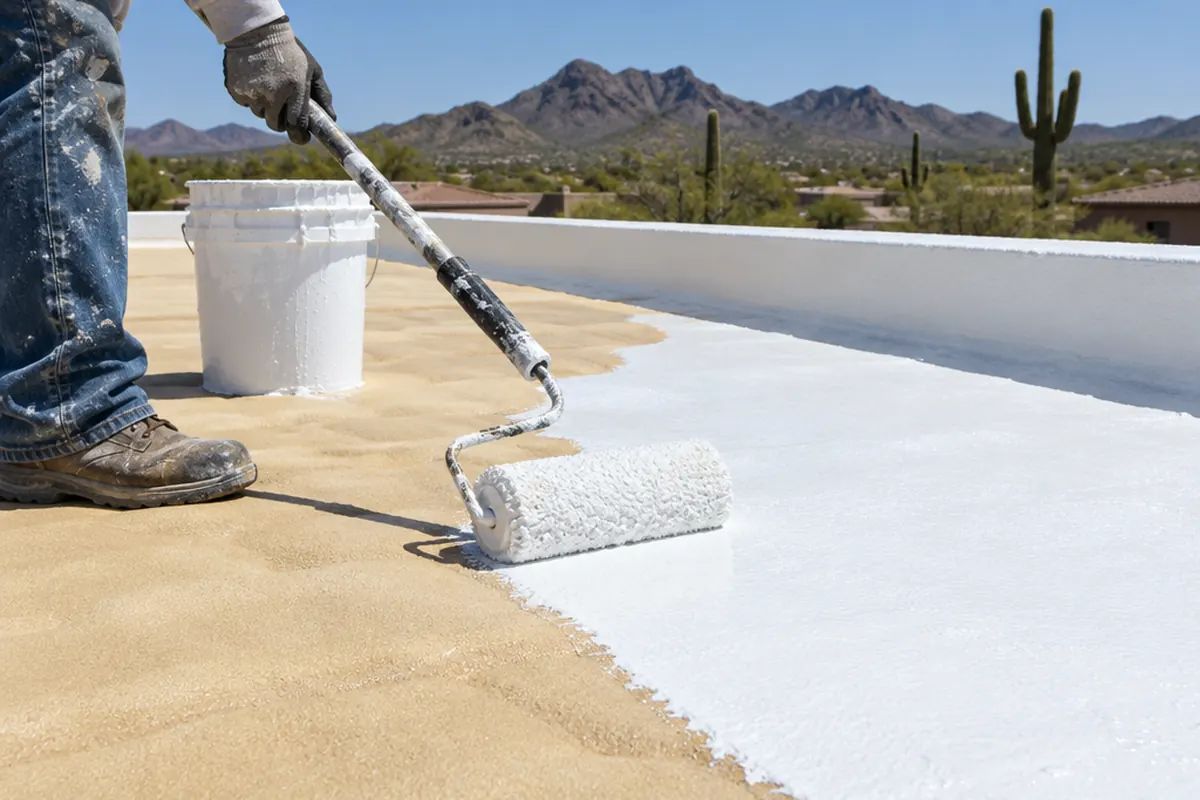
Foam can't take direct sunlight for long. Once the coating wears through, UV starts breaking down the foam surface, which turns crumbly and takes on water. Keeping the coating in good shape is the main job of owning a foam roof.
The Spray Polyurethane Foam Alliance's roofing committee recommends inspecting foam roofs at least once a year, ideally twice, and after severe weather. When the coating is getting thin, a foam roof recoat renews it. Small damage like blisters and bird pecks is handled with foam roofing repair.
Spray Foam Compared With Other Flat Roofs
| Roof type | Seams | Insulation added |
|---|---|---|
| Spray polyurethane foam | None | Yes, across the whole deck |
| Built-up (tar and gravel) | Layered felts | Little |
| Modified bitumen | Lapped seams | Little |
| Single-ply (TPO) | Welded seams | Only with added board |
Is Spray Polyurethane Foam Roofing Right for Your Roof?
It's a strong fit for flat and low-slope roofs, roofs with a lot of equipment, and roofs that pond after storms. It isn't the answer for pitched tile roofs, or for a roof that's wet underneath until the wet layers are removed. If an old roof is past saving, flat roof replacement clears it to the deck first.
An inspection settles it. We check the roof, test for moisture and tell you whether foam, a recoat or a replacement makes sense.
Spray Foam Roofing Questions
Is sprayed polyurethane foam the same as spray foam roofing?
Yes. Sprayed polyurethane foam, spray polyurethane foam, SPF and spray foam roofing all describe the same roof system: foam sprayed onto the deck and sealed with a protective coating.
How long does a spray foam roof take to install?
Most single-family flat roofs are sprayed and coated in a few days once the old surface is ready. Tear-off, deck repair and weather can add time.
Can spray foam go on a pitched tile roof?
Spray foam roofing is built for flat and low-slope roofs. Pitched tile sections stay tile, while the flat areas behind the parapets are where foam fits.
How often does a foam roof need maintenance?
The Spray Polyurethane Foam Alliance's roofing committee advises inspections at least once a year, ideally twice, and after severe weather. Recoating is done when the coating wears thin.